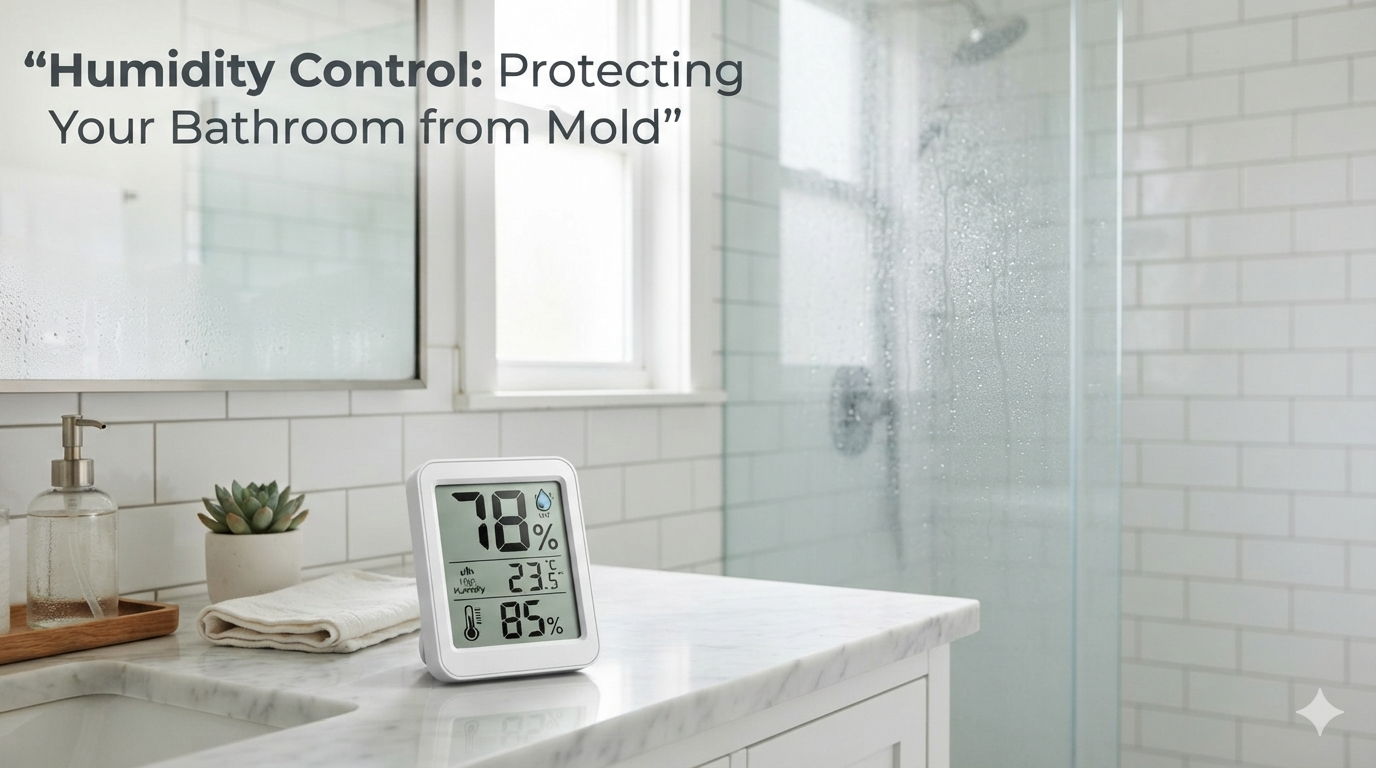
Key takeaway: Mold begins when bathroom humidity stays above 60% for 24–48 hours — a threshold bathrooms cross easily during daily showers. Keeping humidity below 50% most of the time prevents mold growth and protects paint, drywall, grout, and caulk.
🌧️ Why Bathrooms Are the #1 Mold Hotspot
Bathrooms combine three things mold loves:
- Moisture: A single hot shower can spike humidity to 90% or higher.
- Warmth: Mold grows faster in warm temperatures, especially in summer.
- Food sources: Drywall paper, grout, caulk, and even dust contain cellulose — mold’s preferred material.
Even if the rest of the home stays dry, bathrooms often remain above the danger line (60% RH) long enough for mold to colonize surfaces.
🧱 Common Signs of Bathroom Mold
Homeowners should watch for:
- Pink, black, or dark spots along grout or caulk
- Peeling or bubbling paint near showers or ceilings
- Musty odors that return after cleaning
- Condensation lingering on mirrors or walls long after a shower
These are early warnings that humidity isn’t clearing fast enough.
🌬️ Ventilation: The First Line of Defense
Most bathroom mold problems trace back to poor ventilation. A properly sized exhaust fan should move 1 CFM per square foot (minimum 50 CFM).
Homeowner tips:
- Run the fan during every shower
- Keep it running 20–30 minutes afterward
- Test airflow by holding a tissue to the vent — it should pull firmly
- Consider humidity‑sensing fans for automatic control
💧 Daily Habits That Prevent Mold
Simple routines make a big difference:
- Squeegee shower walls — removes 75% of moisture instantly
- Spread towels out to dry
- Leave the shower door or curtain open
- Wipe counters and sinks
- Keep bathroom doors open after use to improve airflow
These habits keep humidity from lingering on cool surfaces.
🛠️ Structural Factors That Increase Mold Risk
Certain bathroom designs make mold more likely:
- High ceilings (steam rises and stays trapped)
- Large walk‑in showers
- Enclosed toilet rooms
- Poorly sized or weak exhaust fans
- No windows or windows that stay closed
- Oversized bathrooms with dead‑air pockets
These features cause humidity to remain above the 60% threshold longer, accelerating mold growth.
🧪 Why Mold Appears So Quickly in Summer
Summer humidity in Louisiana makes bathrooms especially vulnerable:
- Outdoor humidity is higher, even with AC running
- AC may not run long enough to dehumidify
- Warm outdoor air + cool indoor surfaces = condensation
- Mold grows faster in warm temperatures (24–48 hours)
This is why homeowners often see mold appear “overnight” during peak humidity months.
🧼 Cleaning & Maintenance Tips
Homeowners should:
- Clean grout weekly with mold‑preventing cleaners
- Inspect caulk regularly and replace if cracked or stained
- Avoid carpet in bathrooms (CDC guidance)
- Fix leaks immediately
- Use mold‑killing products on hard surfaces
If mold is widespread or keeps returning, professional remediation may be needed.
🌡️ Humidity Targets for a Mold‑Free Home
Authoritative guidance from the EPA and CDC recommends:
- Keep indoor humidity below 50%
- Prevent humidity from staying above 60% for long periods
- Dry wet surfaces within 24–48 hours to stop mold growth
Dehumidifiers can help maintain safe levels, especially in older homes or high‑humidity climates.
🧠 Why Mold Matters: Health Effects
Exposure to mold can cause:
- Stuffy nose
- Coughing or wheezing
- Eye irritation
- Skin irritation
- Worsened asthma symptoms
- Respiratory issues in sensitive individuals
This is why preventing mold isn’t just cosmetic — it’s a health priority.
🏡 Final Takeaway for Homeowners
Bathroom mold isn’t a cleaning problem — it’s a humidity problem.
If humidity stays below 50% and moisture clears quickly, mold simply cannot grow. Good ventilation, daily drying habits, and proper maintenance protect paint, drywall, and your home’s long‑term value.
Leave a Reply