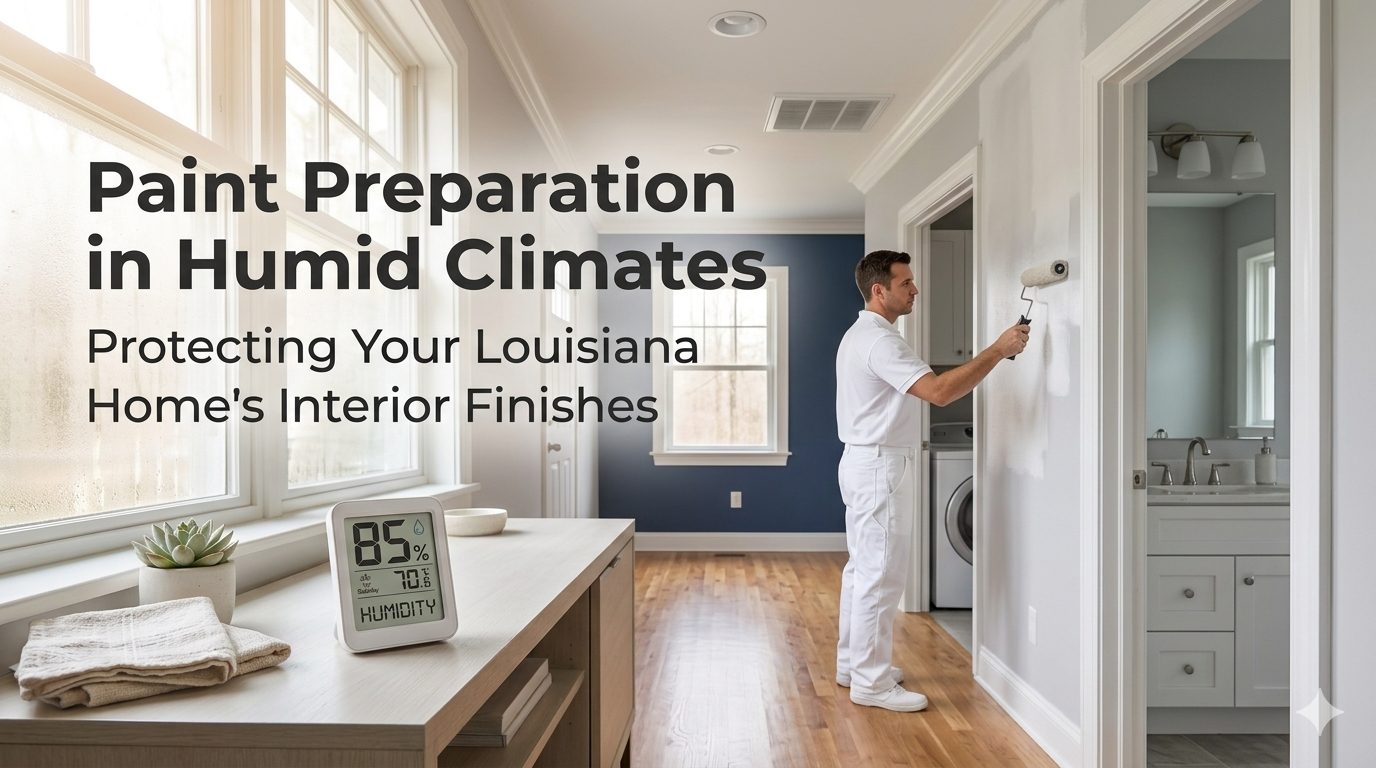
Key takeaway: In humid climates like Louisiana, proper paint preparation is not optional — it’s essential. Moisture affects drywall, primer, paint adhesion, and long‑term durability. The right prep work prevents bubbling, peeling, mold growth, and early paint failure.
🌧️ Why Humidity Makes Paint Prep More Difficult
Humidity affects surfaces long before paint is applied. When moisture levels are high:
- drywall absorbs water
- joint compound softens
- caulk loses elasticity
- surfaces stay damp longer
- paint dries unevenly
- mold spores multiply quickly
If painters skip proper prep, the paint will fail — no matter how expensive the product is.
🧱 Step 1: Inspect for Moisture Problems
Before any sanding or priming, painters check for:
- sweating walls
- soft or swollen drywall
- musty odors
- bubbling or peeling paint
- condensation around vents
- mold spots in corners or ceilings
If moisture is present, the surface must be dried and treated before painting.
🧼 Step 2: Clean the Surface Thoroughly
Humidity encourages mold, soap residue, and dust to cling to walls.
Professional painters clean surfaces using:
- mold‑killing cleaners
- degreasers (for kitchens)
- antimicrobial washes
- TSP alternatives
A clean surface ensures primer bonds correctly.
🔧 Step 3: Repair Humidity‑Damaged Areas
Humidity often causes:
- peeling paint
- soft drywall
- cracked caulk
- swollen trim
Painters repair these by:
- cutting out damaged drywall
- replacing loose tape joints
- re‑caulking with flexible, paintable caulk
- sanding swollen or uneven areas
Skipping repairs guarantees future paint failure.
🎨 Step 4: Use the Right Primer
In humid climates, primer is non‑negotiable.
Best primers for moisture‑prone rooms:
- mold‑resistant primers
- stain‑blocking primers
- high‑adhesion bonding primers
Primers seal the surface, block moisture, and create a stable base for paint.
🌬️ Step 5: Control Humidity During Painting
Even perfect prep can fail if humidity is high during application.
Ideal humidity for painting:
- 40–50% RH
- Above 60% = paint dries slowly and unevenly
- Above 70% = paint may bubble or peel later
Painters often:
- run dehumidifiers
- use fans for airflow
- paint during cooler parts of the day
- avoid painting after showers in bathrooms
Humidity control is part of the job.
🖌️ Step 6: Choose Paint Designed for Humid Rooms
Not all paint is equal in Louisiana.
Best choices:
- mold‑resistant bathroom paints
- satin or semi‑gloss finishes
- high‑quality acrylic paints
Avoid:
- flat paint in bathrooms
- cheap paint with weak binders
- painting over damp surfaces
Quality paint + proper prep = long‑lasting results.
🧠 Final Takeaway for Homeowners
Paint preparation in humid climates is about science, not just appearance. When painters properly clean, repair, prime, and control humidity, the paint lasts longer, looks better, and protects your home from mold and moisture damage.
Good prep is the difference between paint that lasts months and paint that lasts years.
Leave a Reply