🌡️ Why Indoor Humidity Matters
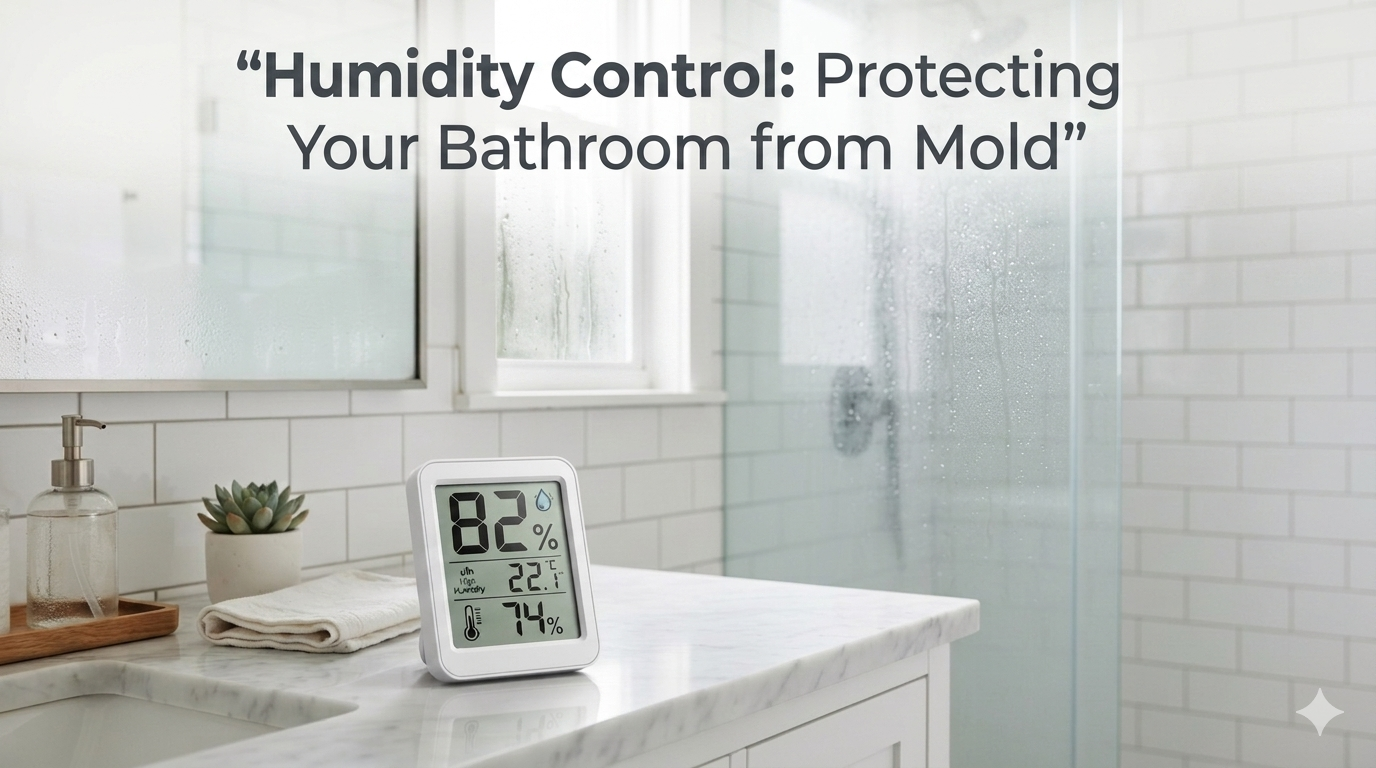
Indoor humidity affects comfort, health, and the lifespan of building materials. The U.S. EPA and ASHRAE recommend keeping indoor humidity between 30–50%, with anything above 60% increasing the risk of mold growth, dust mites, musty odors, and reduced AC efficiency.
High humidity causes:
- sweating walls and windows
- bubbling or peeling paint
- softened drywall
- mold growth in bathrooms and closets
- musty odors
- reduced cooling performance
Low humidity causes:
- dry skin and lips
- static electricity
- shrinking or cracking wood floors and furniture
- dry nasal passages
Whole‑home humidity control keeps the entire house in the safe zone — not just one room.
🏠 What Is Whole‑Home Humidity Control?
Whole‑home humidity control uses your HVAC system to add or remove moisture from the air as it circulates through the ductwork. This is different from portable humidifiers or dehumidifiers, which only treat one room.
A whole‑home system can:
- remove excess moisture in summer
- add moisture in winter
- maintain consistent humidity across all rooms
- protect paint, drywall, wood, and furnishings
Whole‑home humidifiers add moisture during dry seasons, while the AC system removes moisture during humid seasons.
🌬️ How HVAC Systems Remove Humidity
Your air conditioner doesn’t just cool the air — it dehumidifies it.
Here’s how it works:
- Warm, moist indoor air passes over a cold evaporator coil (40–50°F).
- Moisture condenses on the coil and drains away.
- The now‑drier air is circulated back into the home.
This process is called latent cooling, and it’s the primary way homes reduce humidity without a separate dehumidifier.
💧 How Whole‑Home Humidifiers Add Moisture
During winter, indoor air often becomes too dry. Whole‑home humidifiers add moisture by releasing water vapor into the HVAC airflow before it reaches the rooms.
Three main types:
- Bypass humidifiers — affordable, use furnace airflow.
- Fan‑powered humidifiers — add moisture more quickly.
- Steam humidifiers — most precise, best for large homes.
These systems are controlled by a humidistat, which automatically maintains the target humidity level.
🧱 Why Whole‑Home Humidity Control Protects Paint & Drywall
High humidity softens drywall paper and causes paint to fail. Low humidity dries out caulk, trim, and wood.
Proper humidity control prevents:
- bubbling paint
- peeling paint
- cracking caulk
- drywall seam shadows
- mold growth
- sweating walls and ceilings
This is especially important in bathrooms, laundry rooms, stairways, and high‑ceiling homes, where humidity collects in upper air pockets.
🛠️ Common Humidity Problems in Homes
High Humidity (60%+)
- mold growth
- musty odors
- sweating windows
- weak AC performance
- sticky rooms
- paint failure
Low Humidity (below 30%)
- dry skin
- static shocks
- shrinking wood floors
- cracking trim
Uneven Humidity
Often caused by:
- duct leaks
- poor zoning
- oversized rooms
- high ceilings
🔧 How Homeowners Can Improve Whole‑Home Humidity
- Replace HVAC filters regularly — improves airflow and moisture removal.
- Use humidity‑sensing thermostats (Nest, Ecobee, Trane).
- Enable “Dry Mode” on mini‑splits or smart thermostats.
- Run bathroom exhaust fans during and after showers.
- Add ventilation with ERV/HRV systems for balanced airflow.
- Use portable dehumidifiers in problem rooms.
- Seal duct leaks to prevent moisture pockets.
📏 Ideal Humidity Targets
- Summer: 45–55% RH
- Winter: 30–35% RH
- Year‑round comfort zone: 40–50% RH
Leave a Reply