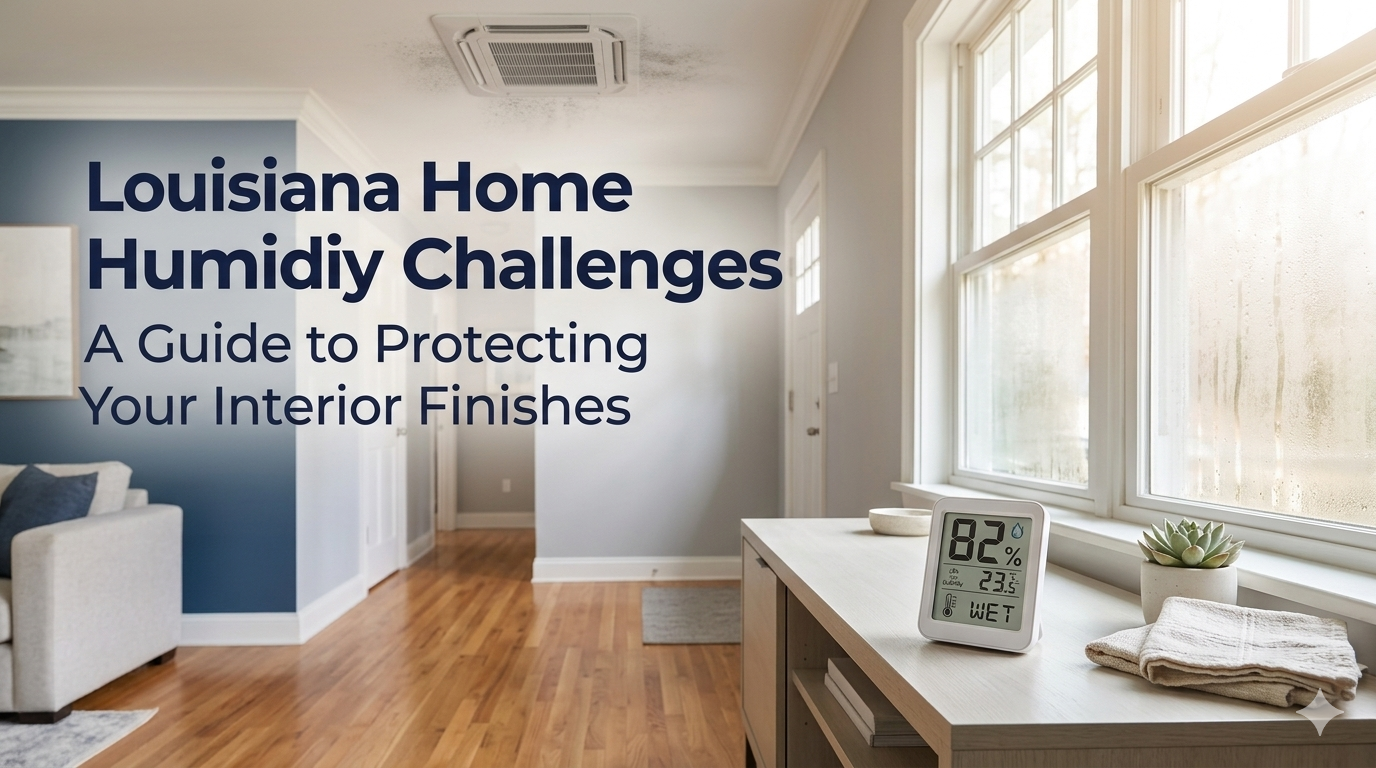
Key takeaway: Louisiana’s climate creates some of the highest indoor humidity challenges in the United States. Homes here must fight moisture every single day — especially bathrooms, kitchens, stairway voids, and high‑ceiling rooms. Understanding how humidity behaves is the first step to preventing mold, paint failure, and long‑term damage.
🌧️ Why Louisiana Homes Struggle With Humidity
Louisiana’s climate is unique. Homeowners face humidity levels that regularly reach 70–95%, even indoors during summer months.
Three factors make this state especially challenging:
- Extreme outdoor humidity — moisture constantly pushes into the home
- High temperatures — warm air holds more water vapor
- Frequent rainstorms — homes stay damp longer
Even well‑built homes fight moisture daily.
🏠 How Humidity Enters the Home
Humidity sneaks in through:
- attic air leaks
- poorly sealed windows
- bathroom steam
- kitchen cooking
- laundry rooms
- stairway voids
- high ceilings that trap warm air
- HVAC systems that run too short to remove moisture
In Louisiana, humidity doesn’t just enter — it stays.
🧱 Rooms Most Affected by Louisiana Humidity
Some rooms struggle more than others:
- Bathrooms — steam + poor ventilation = mold
- Laundry rooms — heat + moisture = sweating walls
- Kitchens — cooking adds moisture
- Closets — dark, enclosed, low airflow
- Stairways — tall voids trap warm, moist air
- High‑ceiling rooms — humidity rises and stays
These areas often show the first signs of paint failure.
🎨 How Humidity Damages Paint & Drywall
High humidity causes:
- bubbling paint
- peeling paint
- soft drywall
- sweating walls
- musty odors
- mold growth
- discoloration around vents
- cracking caulk
Humidity above 60% for long periods allows mold to grow within 24–48 hours.
🌬️ Why AC Alone Can’t Fix Louisiana Humidity
Air conditioners remove moisture — but only when they run long enough.
Problems arise when:
- the AC is oversized
- the home has tall ceilings
- the thermostat is set too low
- the home has poor airflow
- the AC cycles off before removing moisture
This leaves humidity trapped in bathrooms, stairways, and upper rooms.
💧 Signs Your Home Has a Humidity Problem
Homeowners should watch for:
- condensation on windows
- sweating toilet tanks
- bubbling paint near showers
- musty smells in closets
- mold spots on ceilings
- sticky or damp indoor air
- foggy mirrors that stay foggy
- AC running but home still feels “wet”
These are early warnings that moisture is winning.
🛠️ How Homeowners Can Reduce Humidity
Practical steps that make a big difference:
- Run bathroom exhaust fans during and after showers
- Use humidity‑sensing fans
- Keep bathroom doors open after use
- Use dehumidifiers in problem rooms
- Seal attic and window leaks
- Ensure HVAC is properly sized
- Replace filters regularly
- Use ceiling fans to improve airflow
- Squeegee shower walls
- Spread towels out to dry
Humidity control is a daily habit in Louisiana.
📏 Ideal Indoor Humidity Levels
- 40–50% — ideal
- 50–60% — caution zone
- 60%+ — mold risk
- 70%+ — paint and drywall damage likely
Keeping humidity below 50% is the best protection for paint, drywall, and your home’s long‑term health.
Leave a Reply